
Unlock the 5 Elite Benefits of UI/UX Design Services
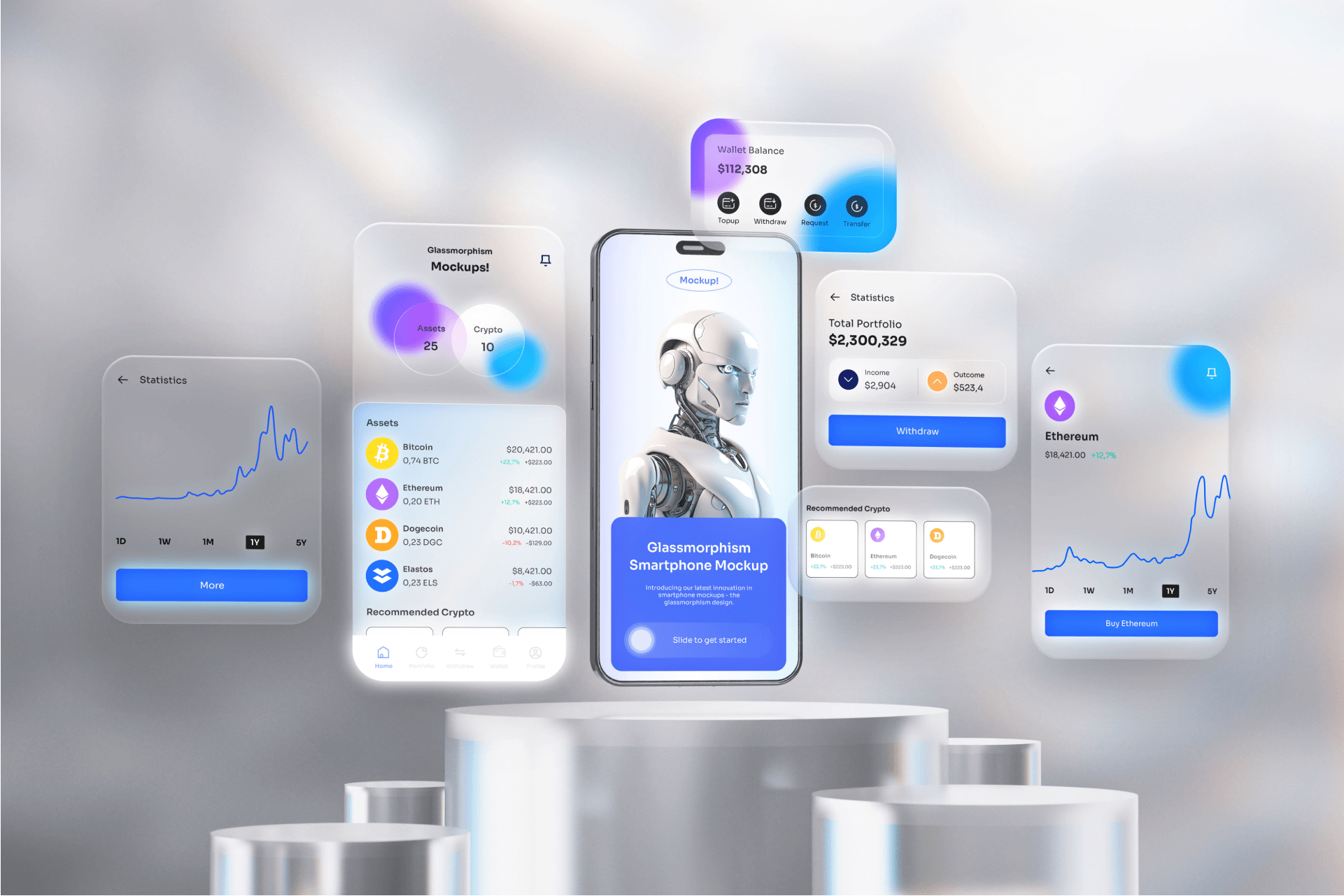
Introduction: Why UI/UX Design Services Matter Today
In today’s digital-first marketplace, design is no longer just about aesthetics. Businesses compete not only on the quality of their products or services but also on the experience they provide to users online. A clunky website, confusing app, or poorly structured checkout process can lose customers within seconds. On the other hand, a seamless, intuitive, and engaging user experience can transform casual visitors into loyal advocates.
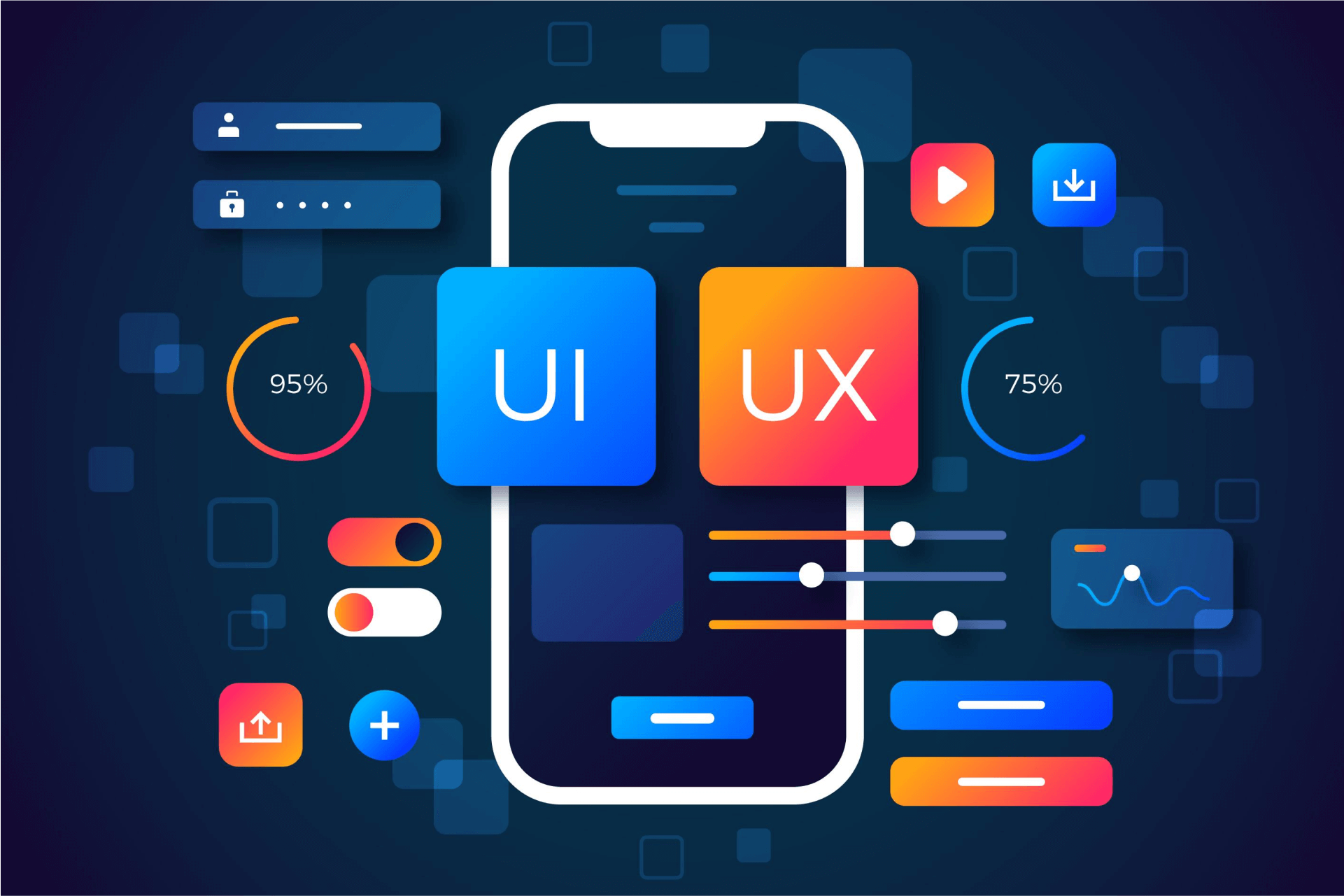
This is where UI/UX design services come into play. These services go beyond surface-level visuals, focusing on how users interact with digital products. A strong UI/UX design ensures that every element on a page serves a purpose, guiding users smoothly from discovery to conversion.
At Creatopia Digital Marketing, we specialize in providing user-focused, conversion-driven UI/UX design tailored to businesses that want to grow. Whether it’s creating responsive websites, crafting engaging apps, or improving user journeys, our team designs with both the customer and the business in mind. The result? Increased conversions, higher engagement, and stronger brand loyalty.
The Business Benefits of UI/UX Design Services

Investing in professional ux design services drives significant business advantages:
1. Dramatically Higher Conversion Rates
A core function of UX is to reduce friction. Every unnecessary step, poorly placed button, or confusing label creates an opportunity for users to abandon the process. A well-designed interface anticipates user intent, makes navigation effortless, and directs attention toward meaningful actions—like signing up, purchasing, or requesting a demo.
Forrester Research found that a frictionless user experience can increase conversion rates by as much as 400%. To put this into perspective: if your current site converts 2% of visitors into customers, strategic UX design could push that number closer to 8%.
At Creatopia Digital Marketing, every design choice is measured against its impact on conversions. We design interfaces that don’t just look good—they guide users toward taking action.
2. Exceptional ROI
Many business leaders view design as a “soft” investment. The reality is different. UXCAM shared that every $1 invested in UX yields $100 in return—a staggering 9,900% ROI.
Why such high ROI? Because UX impacts multiple areas at once: users complete more purchases, support tickets decrease, and loyalty strengthens as people enjoy returning to your platform. Unlike one-off campaigns that provide temporary results, investments in ux design services compound over time, as every visitor benefits from improved design.
3. Enhanced Engagement and Reduced Bounce Rates
Engagement is about more than keeping users on your site—it’s about creating an experience they actually enjoy. Platforms like Spotify or Airbnb demonstrate how intuitive design encourages exploration and fosters loyalty.
On the flip side, 88% of consumers say they won’t return after a poor user experience as mentioned on UserGuiding. With strong UX, users don’t just browse—they interact, consume more content, and connect with features they may have otherwise missed.
For businesses, this directly impacts brand perception and sales. An engaged visitor is more likely to convert, while a disengaged one may leave with a negative impression.
4. Growth That Outpaces Competitors
UX is a powerful differentiator. When two companies offer similar products, the one with the better experience usually wins. According to the Design Management Institute, design-driven companies outperformed the S&P 500 by 228% over a ten-year period (Baymard Institute).
Why? Because users remember how it felt to use your platform. If your competitor’s site is frustrating while yours is smooth and enjoyable, you’ve secured the customer’s loyalty.
At Creatopia, UX isn’t a side service—it’s the foundation of how we help businesses grow and stand out.
5. Strategic Cost Savings Through Efficiency
UX doesn’t just generate revenue—it also saves money. Fixing a design flaw after launch can cost 10x to 100x more than addressing it in the design phase (UX4Sight).
By investing in ui/ux design services early, businesses can test prototypes, identify issues, and fix them before development. This prevents costly post-launch changes and ensures smoother rollouts.
Improved UX also reduces the burden on support teams. When users can find answers easily and navigate without confusion, they’re less likely to submit tickets—freeing resources and reducing overhead.
Key Elements of Effective UI/UX Design Services

Behind every successful digital product is a strong foundation of UX principles. Effective ui/ux design services aren’t just about making things look visually appealing—they’re about creating experiences that are intuitive, inclusive, and engaging.
Below are the essential elements that define high-performing designs, each with real-world context to show why they matter for both users and businesses:
Usability
At its core, usability is about making a product simple and intuitive. Users should instinctively know how to navigate, whether they’re exploring an e-commerce site for the first time or returning to a banking app. If customers have to stop and “figure out” how something works, the design has already failed them. Usability improves satisfaction, reduces frustration, and most importantly, drives conversions. For example, simplifying a checkout form from 10 fields to 5 not only saves time but also increases the likelihood of purchase completion.
Accessibility
Accessibility ensures that everyone can interact with your platform, including individuals with visual, auditory, motor, or cognitive impairments. This isn’t just about compliance with standards like WCAG—it’s about showing that your brand values inclusivity. Accessible design might mean providing alt text for images, ensuring color contrasts are legible, or adding keyboard navigation support.
A great example of accessibility in action is a thoughtfully designed 404 error page. Instead of leaving users confused, an accessible 404 page provides clear navigation options, readable text, and helpful links back to key areas of your site. For users with screen readers or cognitive challenges, this removes frustration and keeps them engaged. It’s a simple feature that shows empathy, prevents drop-offs, and demonstrates that your brand genuinely cares about user experience.
The result is a wider audience reach and a reputation for empathy. When done right, accessibility boosts loyalty and trust, showing users that your brand cares about their experience.
Visual Hierarchy
Humans process visuals faster than text, which makes visual hierarchy critical. Strategic use of typography, color, size, and spacing tells the user’s eyes where to focus first. A bold, high-contrast CTA button, for example, should naturally stand out from surrounding elements. Without hierarchy, everything competes for attention, leaving users confused. With hierarchy, information flows logically, guiding users toward the right action—whether that’s signing up, learning more, or checking out.
Consistency
Consistency builds familiarity, which builds trust. When navigation menus, icons, and buttons behave the same way across all pages and devices, users don’t need to re-learn how to interact with your platform. This reduces cognitive load and helps people feel more comfortable. Inconsistent design, on the other hand, creates friction and doubt. Think about a brand like Apple—the consistency of their design language across apps, devices, and platforms reinforces reliability and strengthens brand identity.
Interaction Design
Interactions are often overlooked, but they play a huge role in creating delight. Hover effects, smooth transitions, and subtle animations add life to interfaces while also providing important feedback. For instance, a button that changes color when hovered reassures users that it’s clickable, while a loading animation sets expectations about wait times. These micro-interactions may seem small, but they build confidence and make digital products feel human, engaging, and responsive.
Mobile Responsiveness
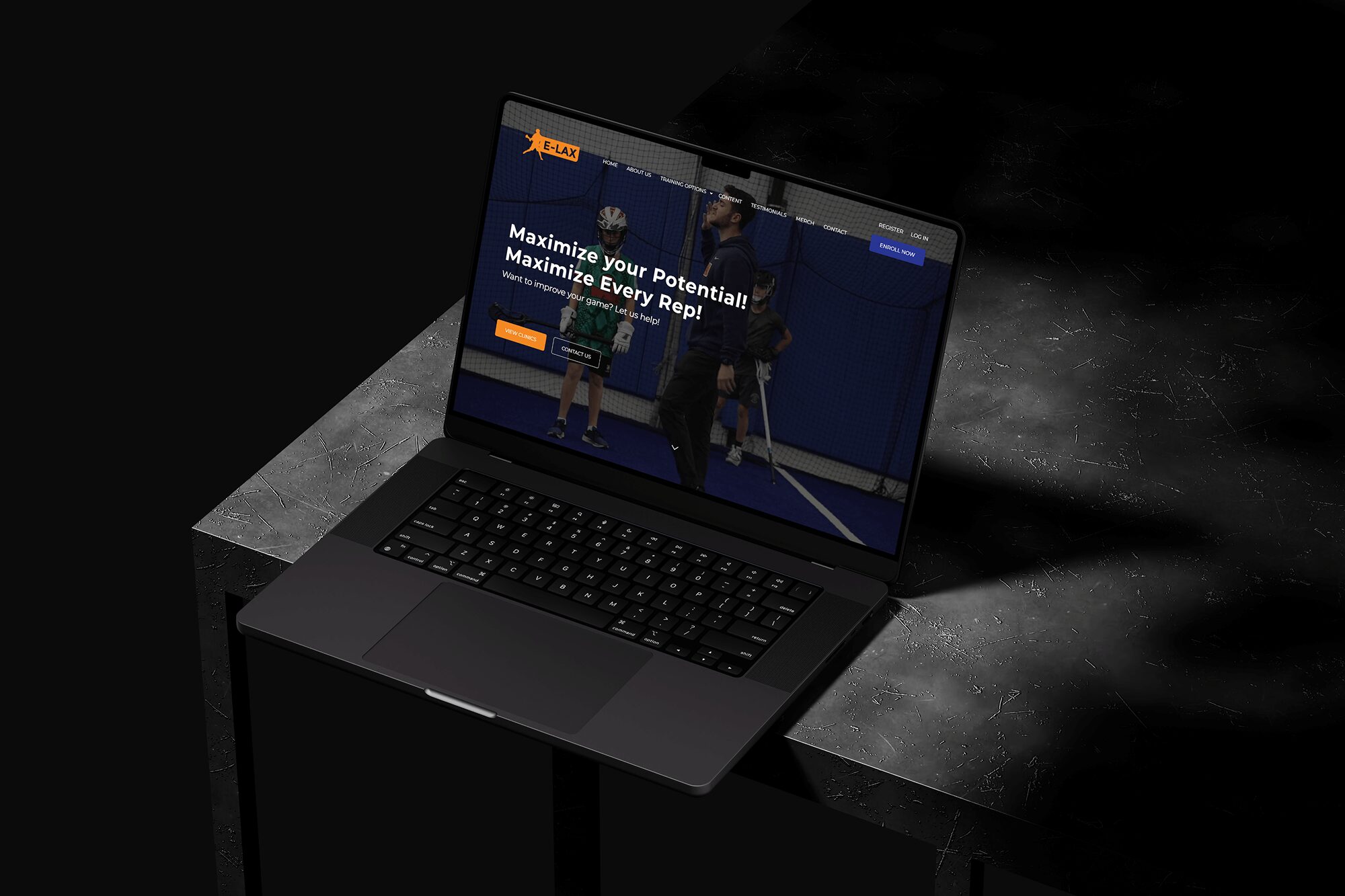
With the majority of global web traffic now coming from smartphones, mobile ui ux design is no longer optional—it’s a necessity. Mobile responsiveness ensures that content adapts seamlessly across devices, from large desktop screens to small mobile displays. This involves more than just shrinking layouts; it requires mobile-specific considerations such as thumb-friendly navigation, fast-loading assets, and simplified menus. Businesses that neglect mobile optimization risk losing significant traffic and revenue. A mobile-first approach ensures that users enjoy the same frictionless experience wherever they interact with your brand.
The Rising Importance of Mobile UI/UX Design
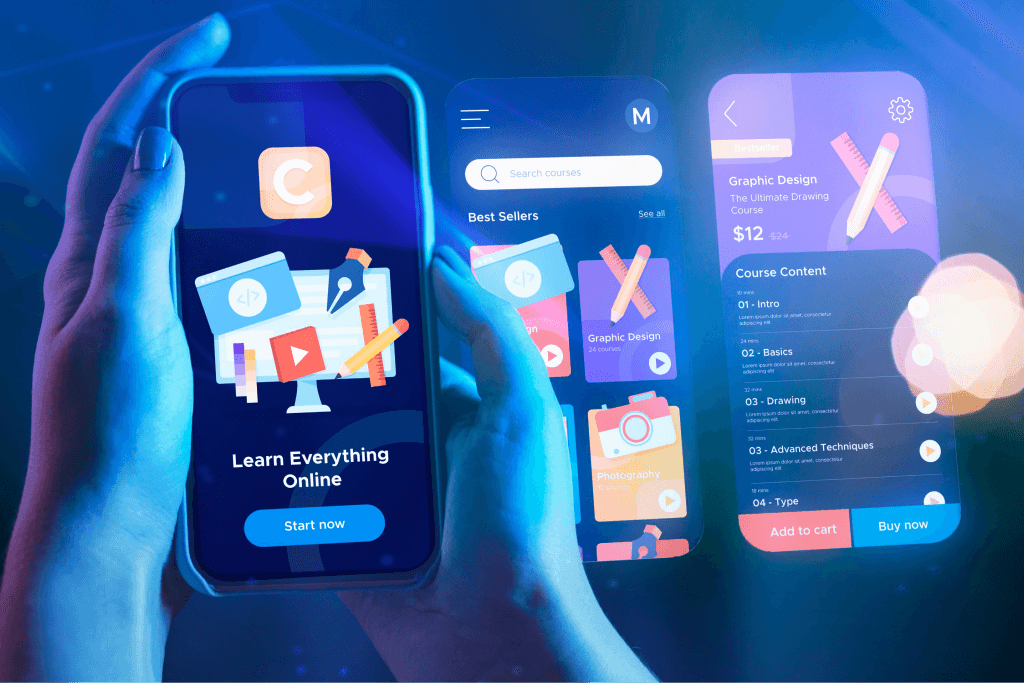
Mobile is no longer the future—it’s the present. More than 60% of web traffic comes from mobile devices, and apps are the primary way people interact with brands. Businesses that overlook mobile ui ux design risk losing a majority of their audience.
Mobile-first design isn’t just about scaling down desktop layouts. It requires a deep understanding of mobile behaviors. Thumb-friendly navigation, fast load times, and simplified content structures are key. For example, an e-commerce app with a complicated checkout process on mobile can lose customers instantly. But with optimized ui/ux design services, businesses can reduce cart abandonment and boost mobile sales dramatically.
Proper mobile ui ux design involves:
-
Thumb-friendly navigation
-
Fast load times and optimized images
-
Simplified, focused contact flows
At Creatopia, we prioritize mobile-first thinking, ensuring every interface feels natural on smaller screens while still delivering full functionality.
Common Mistakes Without Proper UX/UI Support

When businesses neglect professional ux ui design service providers, mistakes often pile up. These missteps cost money, frustrate users, and damage brand reputation.
-
Cluttered Interfaces: Too much content overwhelms users.
-
Unclear Navigation: Confusing menus make it hard for visitors to find what they need.
-
Ignoring Accessibility: Overlooking users with disabilities limits your audience.
-
Slow Mobile Performance: Non-optimized sites frustrate mobile users.
-
No Testing: Skipping usability tests means design flaws go unnoticed until it’s too late.
Creatopia’s Step-by-Step UI/UX Design Process
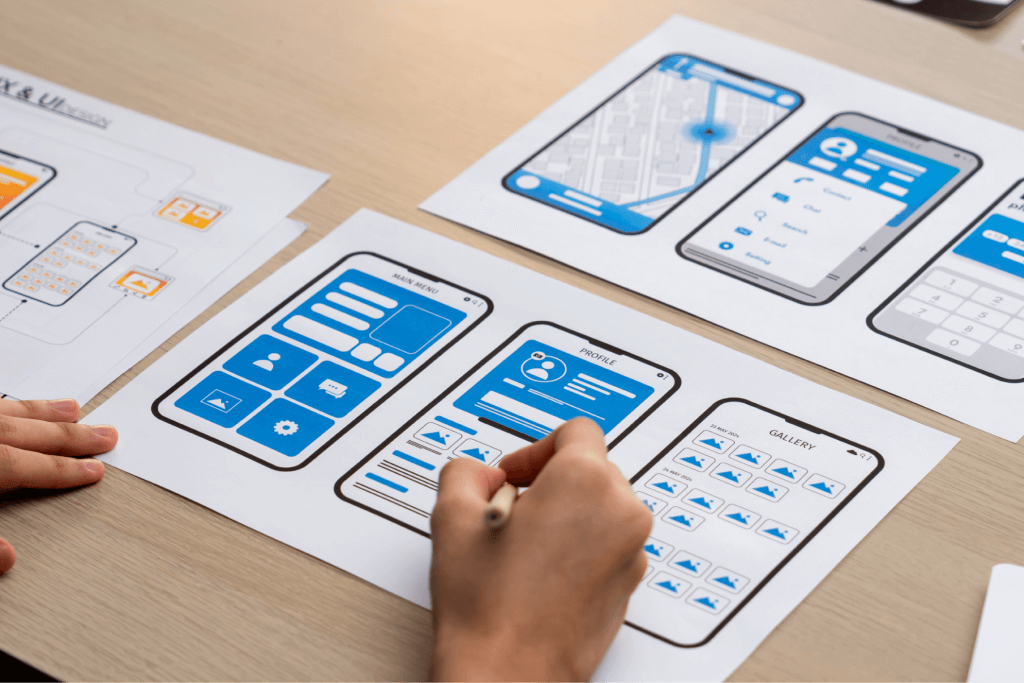
At Creatopia Digital Marketing, we know that effective design isn’t about guesswork—it’s about following a clear, strategic process. Our ui/ux design services use an eight-step framework that blends research, creativity, and continuous optimization. This ensures every project we deliver is intuitive for users and impactful for your business.
1. Discovery & Scope
Every project begins with a deep dive into your business. We take time to understand your goals, your target audience, and the challenges you’re facing. This step is like building the blueprint for a house—you need a strong foundation before you can start designing. By defining the project scope and aligning with your objectives early, we set the stage for design decisions that directly support your business vision.
2. Research & Analysis
ideal customers, mapping out customer journeys to see where they might get stuck, and analyzing competitors to spot gaps and opportunities. This step helps us answer key questions like: What do your users expect? Where do competitors fall short? And how can we make your product stand out? The insights gained here form the backbone of our design strategy.
3. Wireframes & Ideation
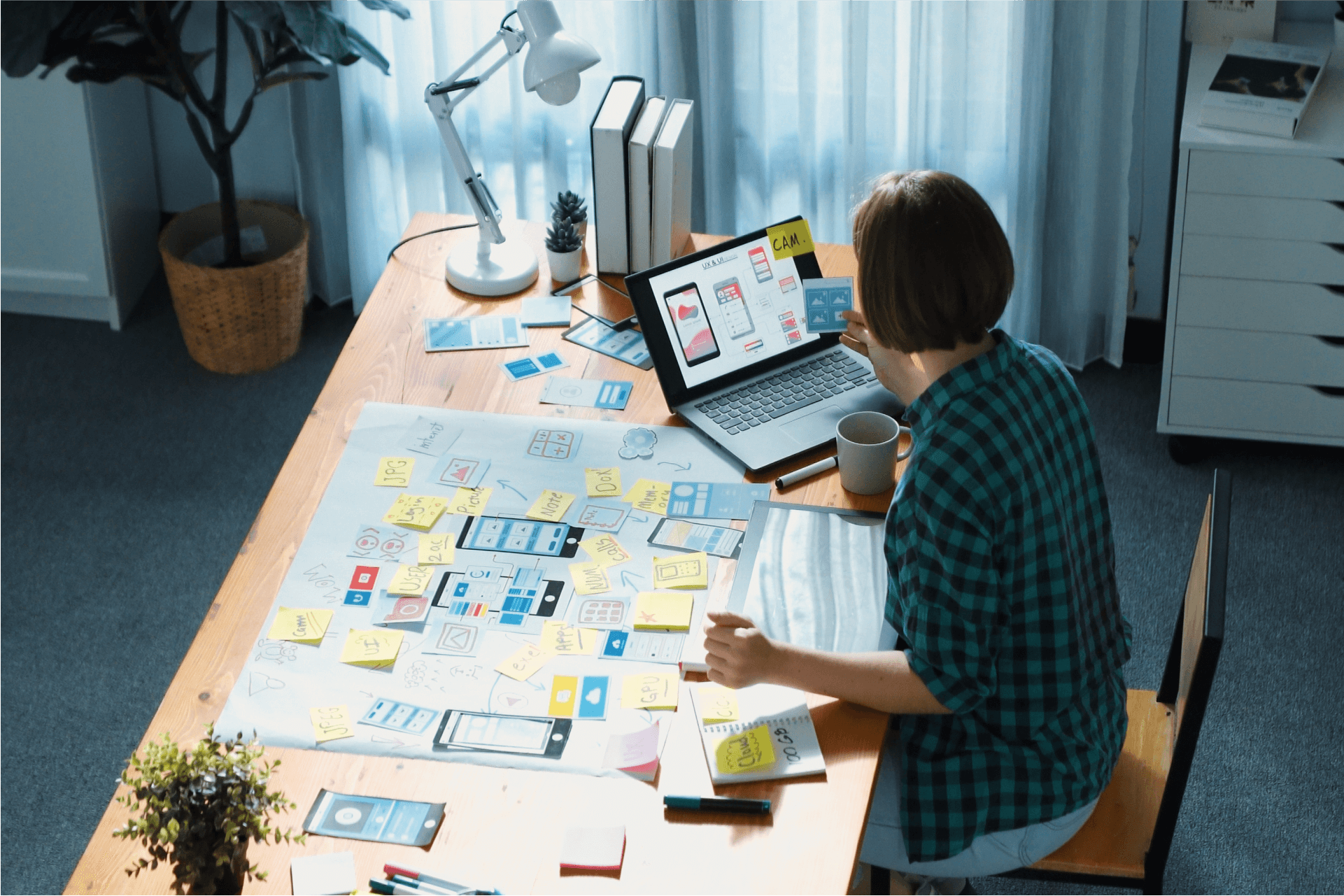
After research, we start sketching the big picture. Wireframes are simple layouts that show where key elements will go—like navigation, buttons, or content blocks. Think of them as the skeleton of your digital product. At this stage, we explore multiple ideas and test different flows to see which makes the most sense for your users. Because wireframes are quick to adjust, they allow us to refine concepts before investing in high-quality visuals.
4. UI Visual Design
With the structure in place, we bring your brand to life through visual design. This is where we apply colors, typography, and imagery that resonate with your audience. But visuals are never just decoration—they serve a purpose. A bold button grabs attention for a call-to-action, while consistent colors and fonts build trust and recognition. We ensure that every detail aligns with both usability standards and your brand identity.
5. Prototyping
Once the visuals are ready, we create interactive prototypes. These are clickable versions of the design that simulate how the final product will work. Prototyping allows stakeholders and even test users to experience the design as if it were live. This step helps us validate the flow, catch potential issues early, and gather valuable feedback before moving into development.
6. Usability Testing
Great design isn’t based on assumptions—it’s tested with real people. During usability testing, users interact with the prototype while we observe how easily they can complete tasks. For example, can they find the checkout button quickly? Do they understand the navigation labels? This process highlights pain points we might not see ourselves, giving us the chance to fine-tune the design for a smoother user journey.
7. Development & Launch
After testing and refinements, we collaborate closely with developers to bring the design to life. This ensures that what gets coded matches the design vision without compromise. We also make sure the final product is responsive (works across devices) and SEO-ready so that it performs well both for users and search engines. Launching isn’t just flipping a switch—it’s the culmination of research, strategy, and testing working together seamlessly.
8. Optimize Post-Launch
Our work doesn’t end once your product goes live. We monitor performance using analytics to track how users are interacting with your platform. Are people completing sign-ups? Is the bounce rate dropping? Based on real data, we make ongoing adjustments to keep your product aligned with user expectations and evolving business goals. Continuous optimization ensures that your investment in ui/ux design services keeps paying off long after launch.
Future Trends in UI/UX Design Services
The landscape of UI/UX design is evolving quickly, and businesses that want to remain competitive must adapt to these emerging trends. By watching the direction of industry leaders and research institutions, we gain a clear picture of where digital experiences are headed.
One major shift is the rise of AI-powered design tools. According to arXiv research, tools like Figma are increasingly incorporating artificial intelligence to automate repetitive tasks and assist in ideation, enabling designers to move faster and focus on high-level creativity. This shift is already transforming workflows, and at Creatopia we use AI enhancements to accelerate prototyping while keeping strategy and brand identity at the core.
In addition, AI-generated interfaces are on the horizon. arXiv recently reported on experiments with generative models that can produce functional user interfaces from text prompts or sketches using diffusion-based frameworks. This research highlights a future where design ideation could move from concept to prototype in minutes. While still emerging, Creatopia closely tracks these developments to responsibly integrate them into client projects when they provide efficiency and value.
Meanwhile, industry leaders are focusing on value-driven use of AI. The UX Design Institute emphasized in its 2025 trends report that businesses should balance automation with human-centered design principles . Similarly, the Nielsen Norman Group shared that AI should enhance, not replace, empathy in design . At Creatopia, we align with this philosophy—adopting AI strategically while ensuring that the human element remains central.
Another clear direction is that accessibility is becoming standard. Both the UX Design Institute and Caltech Bootcamps highlighted that inclusive design is no longer optional but a foundational expectation for digital products (UX Design Institute, Caltech Bootcamps). From regulatory pressures to growing ethical awareness, accessibility benefits both users and businesses by expanding reach and building trust. At Creatopia, we embed accessibility checks at every stage of our process.
The future will also see growth in immersive and 3D experiences. Caltech Bootcamps noted that interactive 3D visuals and spatial storytelling are gaining traction in industries like e-commerce, gaming, and education. Behance also shared that 2025 will feature more bold animations and immersive design concepts that create lifelike, engaging interactions. Creatopia is already exploring 3D storytelling for clients who want to differentiate themselves in saturated markets.
Finally, designers are starting to view AI as a creative partner. arXiv highlighted research on how AI can be used in brainstorming and ideation, expanding the range of concepts that designers can explore before refining with human judgment. At Creatopia, we see this hybrid collaboration as the future—AI helps us generate possibilities quickly, while our team ensures the final output aligns with brand strategy and emotional resonance.
Creatopia’s Future-Ready Approach:
What sets Creatopia apart is how we adopt these innovations. We don’t follow trends for the sake of novelty. Instead, we evaluate each emerging practice—whether it’s AI-powered prototyping, inclusive design standards, or immersive storytelling—and apply it when it delivers measurable value for our clients. This ensures that our partners aren’t just adapting to the future of UX—they’re leading it.
Conclusion: Partner with Creatopia for UI/UX Success
In today’s crowded digital landscape, ui/ux design services are foundational for building engagement, trust, and growth. TO deliver real results, design must be strategic, user-centered, and performance-driven.
At Creatopia Digital Marketing, our services blend creativity, research, and marketing strategy. We don’t just create beautifully designed experiences—we craft platforms that convert, retain, and uplift brands.
Ready to elevate your digital presence with UI/UX that delivers both aesthetic and business value?
Contact us today and let us help you design a digital experience that drives engagement, conversions, and lasting brand loyalty.