
5 Unstoppable Strategies for Combining SEO and UX

SEO and UX is like Jollibee with Gravy
Not every day does a podcast bring together digital marketing practitioners to talk shop in a language that resonates deeply with Filipinos. Seokwentuhan, a well-loved Tagalog podcast on SEO and digital marketing, has been doing exactly that—bridging the gap between technical know-how and relatable, everyday storytelling.
Recently, Gen, the founder of Creatopia Digital Marketing, was invited as a guest speaker. His topic? The powerful intersection of SEO and UX—two fields often seen as separate, but which, when aligned, drive unstoppable business growth.
This feature not only positioned Gen as a thought leader but also highlighted Creatopia’s unique strength: building websites and digital campaigns where ux design & seo work hand in hand.
In this blog, we’ll unpack highlights from the episode, break down the synergy between ux and seo, and share practical tips businesses can apply today.
The Overlap Between SEO and UX

SEO brings people in. UX keeps them there. Together, they convert visitors into loyal customers.
Many companies mistakenly view seo & ux design as separate departments: SEO as the domain of content, keywords, and rankings; UX as the world of design, usability, and interfaces. The truth, as Gen explained on Seokwentuhan, is that these two are inseparable.
-
SEO answers the question: Can people find your website?
-
UX answers the question: What happens when they do?
Google itself acknowledges this overlap. Search algorithms now prioritize page experience, site speed, and mobile usability—all traditional UX concerns. Likewise, UX success depends on traffic from search visibility. It’s a cycle: SEO brings users, UX delights them, and positive behavior signals feed back into better SEO.
Podcast Highlights & Key Insights
Gen’s guest feature on Seokwentuhan was packed with insights. Here are four of the most powerful:
1. Traffic Without Experience Is Pointless
Gen explained that many businesses obsess over driving traffic but neglect what happens after the click. “You can rank #1 on Google, but if your site confuses users, they’ll leave in seconds,” he emphasized.
2. Speed Is the Hidden Conversion Booster
One of the overlooked bridges between SEO and UX is site speed. Gen noted that every second of delay can reduce conversions by up to 7%. A fast-loading page satisfies both search algorithms and impatient users.
3. Design Should Speak Google’s Language
Gen pointed out that ux & seo alignment means structuring design for both humans and bots. Clear headings, logical content flow, and accessible layouts help users navigate while also making content easier for search engines to index.
4. Empathy Is the Ultimate Ranking Factor
Perhaps the most human insight Gen shared was that successful design and SEO strategies start with empathy. By understanding what users feel, expect, and struggle with, businesses can create digital experiences that rank high and resonate deeply.
Why Businesses Need to Integrate SEO & UX
Businesses often treat SEO as a marketing function and UX as a design function. Gen argues this siloed approach is costly.
When SEO and UX are integrated:
-
Visitors find websites more easily.
-
They stay longer because navigation feels natural.
-
They engage more because the design matches their intent.
-
They convert more often because friction is reduced.
The business case is clear: ignoring UX while investing in SEO means paying for traffic that doesn’t convert. Ignoring SEO while investing in UX means building a great experience nobody finds. The two must grow together. In case you want to dive deeper into why UI/UX is such a game changer, check out our post on Benefits of UI/UX Design Services at Creatopia, where we explore how thoughtful design improves user retention, reduces churn, and increases lifetime value. That article complements what we’ve discussed here—it reinforces how integrating seo and ux doesn’t just drive traffic, but builds meaningful, lasting relationships with your audience through design that serves real user needs.
Practical Strategies for Combining SEO & UX

From the podcast and Creatopia’s experience, here are practical strategies businesses can start applying today:
Prioritize Mobile-First Design
Over 60% of traffic comes from mobile. A mobile-optimized design improves rankings and creates smoother user journeys.
Use Clear Hierarchies
Headings (H1, H2, H3) not only guide readers but also help search engines understand content structure.
Focus on Page Speed
Compress images, leverage caching, and use lightweight code. Faster load times are loved by both Google and users.
Design for Accessibility
Alt text, readable color contrasts, and keyboard navigation improve usability for everyone—while boosting SEO through better indexing.
Match Content to Intent
Every page should answer a specific user question. This satisfies search intent and keeps visitors engaged.
Common Mistakes & How to Avoid Them
Gen also cautioned against several common mistakes businesses make when trying to balance SEO and UX. One of the most damaging is keyword stuffing at the expense of readability. Over-optimized content may please algorithms in the short term but often drives users away because it feels unnatural and forced. Another mistake is focusing solely on visuals. While a beautifully designed site may impress at first glance, without proper SEO optimization it risks remaining invisible in search results.
Equally problematic is ignoring analytics. Without tracking how users behave on a website, businesses miss out on valuable insights that could improve both SEO performance and user experience. Finally, many companies treat SEO and UX as one-time projects rather than ongoing processes. In reality, both require continuous refinement to keep up with evolving user expectations and algorithm updates. Avoiding these pitfalls ensures that businesses don’t waste resources on half-baked strategies and instead build sustainable digital growth.
Future Trends: Where SEO and UX Are Heading Together

Looking ahead, Gen and the Seokwentuhan team agreed that the line between SEO and UX will continue to blur. Google’s Core Web Vitals will remain a critical ranking factor, meaning that performance elements such as load speed, interactivity, and visual stability directly influence both search visibility and user satisfaction.
At the same time, the rise of voice search is pushing websites to adapt their content and design for conversational queries. According to Think with Google, over 27% of people now use voice search on mobile, which means businesses must create structured, easy-to-answer content that feels natural when spoken.
Another important trend is AI personalization, where algorithms merge content targeting with adaptive interfaces to deliver experiences tailored to individual users. Research from McKinsey shows that personalization can lift revenues by 10–30% when executed effectively, highlighting how critical this integration will become for SEO and UX strategies alike.
Inclusivity is also moving from optional to essential. Reports from the Nielsen Norman Group emphasize that accessibility is no longer just a compliance requirement but a competitive advantage, while W3C Web Accessibility Initiative stresses that designing for all users builds trust and expands audience reach.
Creatopia is already preparing clients for these shifts by embedding SEO strategies into every stage of the design process and ensuring that user experiences are optimized not only for algorithms but also for real people. This forward-thinking approach guarantees that businesses stay ahead of the curve in a digital landscape where SEO and UX are no longer separate efforts, but a unified strategy for sustainable growth.
Shoutout to Seokwentuhan.com
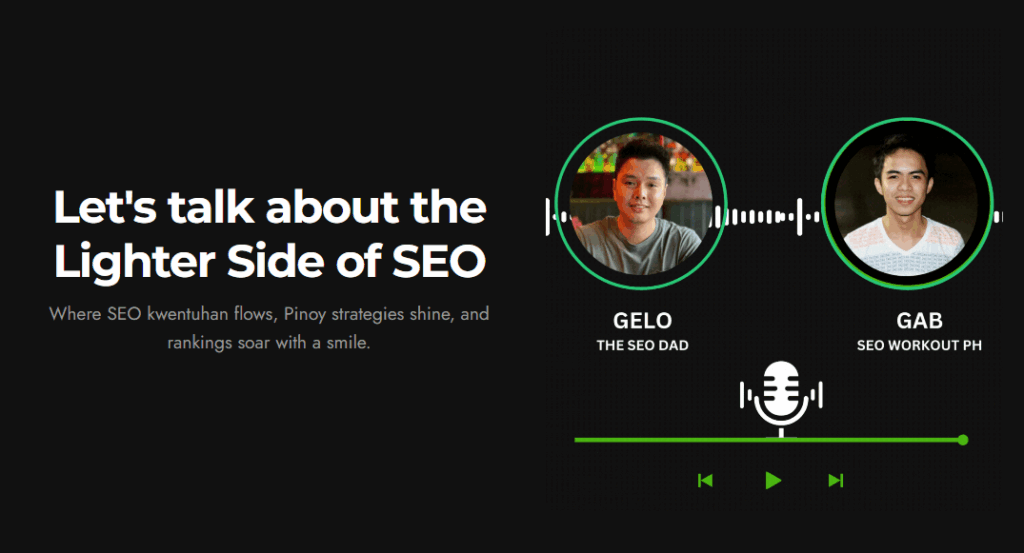
A special mention goes to Seokwentuhan.com, the platform behind the podcast. By creating accessible conversations in Tagalog about SEO, they’ve made complex concepts relatable to freelancers, marketers, and entrepreneurs across the Philippines.
Their mission—to democratize SEO knowledge—aligns perfectly with Creatopia’s own belief that digital growth should be inclusive, practical, and rooted in user value.
Work with us to design digital experiences that are not only discoverable in search but also intuitive and engaging for users. Let us help you build a platform that ranks higher, converts better, and grows stronger with every interaction.